How to Make Money Trading Meme Coins
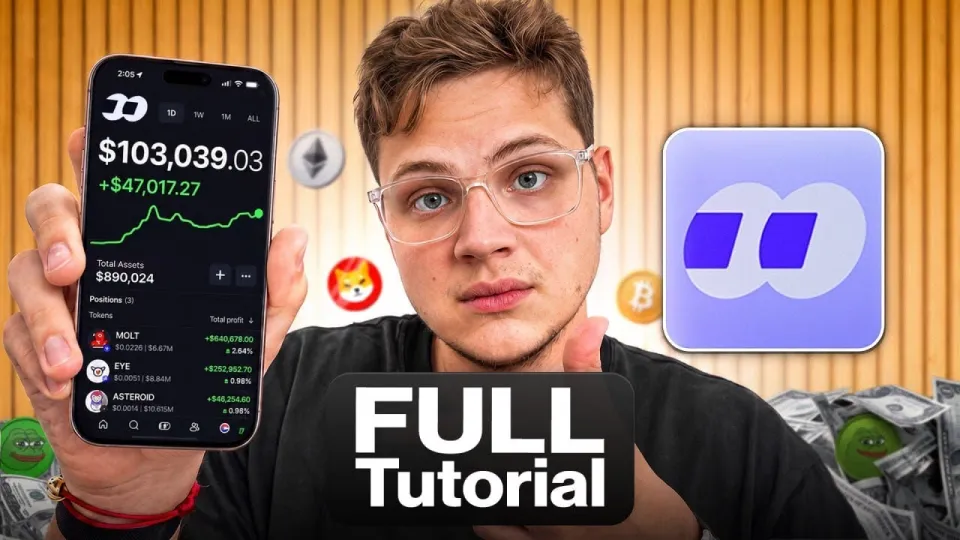
Video: How To Make Money Trading Memecoins (fomo app tutorial)
Want articles like this for your own video to promote it on YouTube and Google? Order them through the Telegram bot @sat_sit_bot. The bot writes and publishes the articles itself (with your YouTube video embedded) on popular topical websites (no ads). Try it free: 50 articles on us.
· based on the channel Orangie Web3
Meme coins are tokens with no revenue, no product and no cash flow — the only way to make money trading them is to buy before other people do and sell into their demand. Everything else, from which chain you use to which app you trade on, is execution. Orangie Web3 breaks this process down in a walkthrough of the fomo trading platform, where you can register and trade Solana meme coins with a single account instead of stitching together a wallet, a chart tool and a scanner.
What a meme coin actually is
A meme coin is a cryptocurrency whose value rests entirely on attention and community rather than on usage or earnings. Dogecoin is the original example, but the current generation launches by the thousands on Solana through launchpads that let anyone mint a token in minutes with no code and no audit.
That changes the economics of trading. In equities you can argue about earnings multiples; in meme coins the only questions are who is buying next, how much liquidity sits in the pool, and how quickly the deployer can exit. Three practical consequences follow:
- Supply is effectively unlimited. New tokens appear constantly, so a coin has no scarcity value on its own — only its current holder base does.
- Liquidity is thin and removable. A pool with a few thousand dollars can be drained by one large sell, which is why rug pulls are routine rather than exceptional.
- Narratives decay fast. A meme that trends for a week may be dead in three days. Holding through a decline hoping for a bounce is the single most expensive habit in this market.
How trading platforms like fomo fit in
The fomo app exists to compress the messy parts of meme coin trading — wallet setup, token discovery, charting and execution — into one interface. Orangie Web3's tutorial positions it as a beginner-friendly route into Solana meme coins, and the platform link in the video description doubles as a referral registration.
The workflow in practice looks like this:
- Create an account and fund it, usually with SOL, since Solana is where most meme coin volume sits.
- Browse trending or newly launched tokens rather than searching for tickers manually.
- Check the chart and liquidity before buying — a token with a suspiciously flat line and tiny pool is a warning, not an opportunity.
- Place the buy, then immediately set your exit plan: a target to sell part of the position and a level at which you accept the loss.
A dedicated app does not make bad trades good. It removes friction, and friction cuts both ways: the easier it is to buy, the easier it is to overtrade. Treat the interface as a tool, not a strategy.
Position sizing and the math of survival
Most people lose money in meme coins not because they pick bad tokens but because one bad token wipes out ten good ones. Position sizing is the fix, and it is arithmetic, not intuition.
A workable framework for a small account:
- Cap any single trade at 2–5% of your trading capital. With $500, that is $10–25 per position. It feels trivial until you have a 70% loss and realize you barely noticed.
- Take profit in tranches. Selling half at 2x locks in the initial risk and lets the rest run; selling nothing until 10x is how unrealized gains disappear.
- Set a hard daily loss limit. Two or three stopped-out trades in a row usually mean the market regime has changed, not that you are due for a win.
- Account for fees and slippage. Solana fees are small, but slippage on a thin pool can quietly eat 5–15% of a market order.
One viewer described reloading a drained wallet with $90, making about $30 in a day and then giving it back. That pattern — a small win followed by a full giveback — is almost always a sizing problem, not a picking problem.
Why copy-trading usually loses money
Copy-trading sounds like the shortcut: find a wallet that is consistently profitable and mirror its buys. In meme coins it is structurally late, and the most-liked comment under the video makes the point bluntly — large traders frequently buy on a separate wallet before buying on the wallet everyone watches, so the copy trade arrives after the price has already moved.
The mechanics behind that:
- A visible buy from a known wallet is itself the marketing. Followers pile in, pushing the price up, and the earlier position is sold into that demand.
- Blockchain data is public but not instant. By the time a trade is indexed, surfaced in a tool and executed by you, the entry has shifted several percent.
- Copy-trading tools execute at market. On a token that just spiked, your fill can be dramatically worse than the wallet you copied.
If you want to use on-chain data, use it for research — checking holder concentration, whether the deployer still holds a large share, how much liquidity is locked — rather than as a signal to buy the same second as someone else.
Questions traders ask before their first buy
The doubts that come up most often from newer traders are about fear, not mechanics. Several viewers said meme coins felt less intimidating after seeing the process laid out step by step, and one asked whether live coaching exists for absolute beginners. That is a reasonable instinct: the first ten trades are where habits form.
Other recurring concerns:
- "Is it too good to be true?" Sometimes yes. If a token promises guaranteed returns, a locked-in APY or a "safe" 100x, it is a scam structure, not an opportunity.
- "How do I know when to sell?" Decide before you buy. A written target — sell half at 2x, exit the rest at 4x or if it drops 40% from the high — removes the decision from the moment when emotion is highest.
- "Do I need a big bankroll?" No, but you need enough that fees and slippage do not dominate. Trading $20 positions on thin pools is mostly a donation to liquidity providers.
- "What about alerts?" The most requested missing feature under the tutorial was price alerts. Until your platform has them, set them manually or check positions at fixed times rather than refreshing the chart all day.
Building a repeatable process
A process beats a prediction in a market where nobody can forecast which meme survives the week. The traders who last tend to do the same four things regardless of which token is trending.
First, they keep a log: token, entry, size, thesis in one line, exit, and the reason for the exit. After twenty trades the log tells you more about your edge than any influencer. Second, they separate research time from execution time — scanning during the day, buying only at planned moments, not on impulse. Third, they size so that being wrong five times in a row is survivable. Fourth, they take money out. Profits that stay in the account eventually become position size, and position size eventually becomes a loss.
Orangie Web3's framing of the fomo app as an onboarding tool fits this: the app handles execution, but the discipline has to come from the trader.
Useful links
- fomo trading platform (registration and referral): https://fomo.family/r/orangie
- Orangie Web3 Discord community: https://discord.gg/memecoins
- Orangie Web3 on Instagram: https://www.instagram.com/orangieyt/
Final thoughts
Making money trading meme coins comes down to buying attention early, sizing so that mistakes are cheap, and selling into demand instead of hoping for more. The tools are the easy part — a platform like fomo removes most of the setup friction — while the hard part is refusing to copy trades that are already priced in and refusing to hold a dead narrative. Start with small positions, write down your exits before you enter, and treat every loss as data. The breakdown this article is based on comes from Orangie Web3, whose tutorials focus on making on-chain trading understandable for newcomers.
Key takeaways
- Meme coins are community-driven tokens with no cash flow — profit comes only from price movement, so timing and risk control matter more than the coin itself.
- Orangie Web3 walks through the fomo trading platform as a simple entry point for buying Solana meme coins without juggling multiple tools.
- Copy-trading is the most common trap: large traders often buy on a separate wallet first, so by the time a trade is mirrored the move is already priced in.
- Fixed rules — small position size, pre-set take-profit levels and a hard stop on losing days — separate traders who survive from those who get wiped.
- Price alerts and a written trade log are the two features most requested by viewers and the simplest way to stop chasing candles.
Questions & answers
How much money do I need to start trading meme coins?
You can start with a small amount, but positions should be large enough that fees and slippage do not eat the trade. A practical rule is to risk 2–5% of your trading capital per position, so a $500 account means $10–25 per trade. Anything smaller is mostly a donation to liquidity providers on thin pools.
Why does copy-trading big wallets usually lose money?
Large traders often buy on a separate wallet before buying on the wallet everyone is watching, so the public buy is what pushes the price up and their earlier position is sold into that demand. By the time a copy trade executes at market, the move is already priced in and your fill is worse than the wallet you mirrored.
When should I take profit on a meme coin?
Decide before you buy: for example, sell half at 2x to recover the initial risk and let the rest run, with a rule to exit if the price drops a set percentage from its high. Selling nothing until a 10x is how unrealized gains disappear, because meme narratives can decay within days.
Does the fomo app guarantee profits?
No trading platform does. The fomo app compresses wallet setup, token discovery and execution into one interface, which reduces friction but also makes overtrading easier. Profitability still depends on position sizing, exit rules and avoiding tokens with thin liquidity or a deployer holding a large share of supply.
Source: How To Make Money Trading Memecoins (fomo app tutorial) · Markdown version